Solo exhibition. 4 May – 8 June 2024
The Drawing Room
Manila



From the artist:
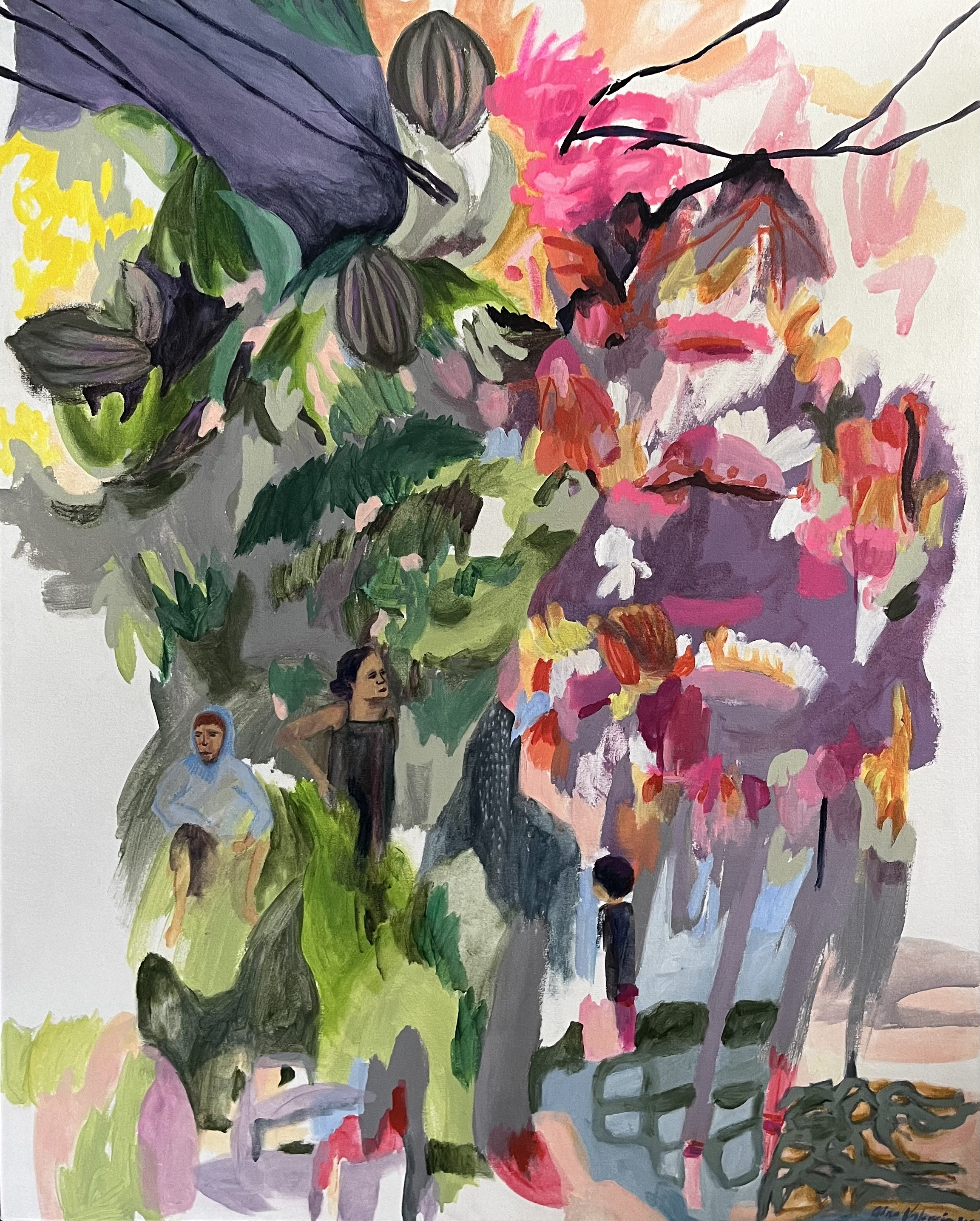
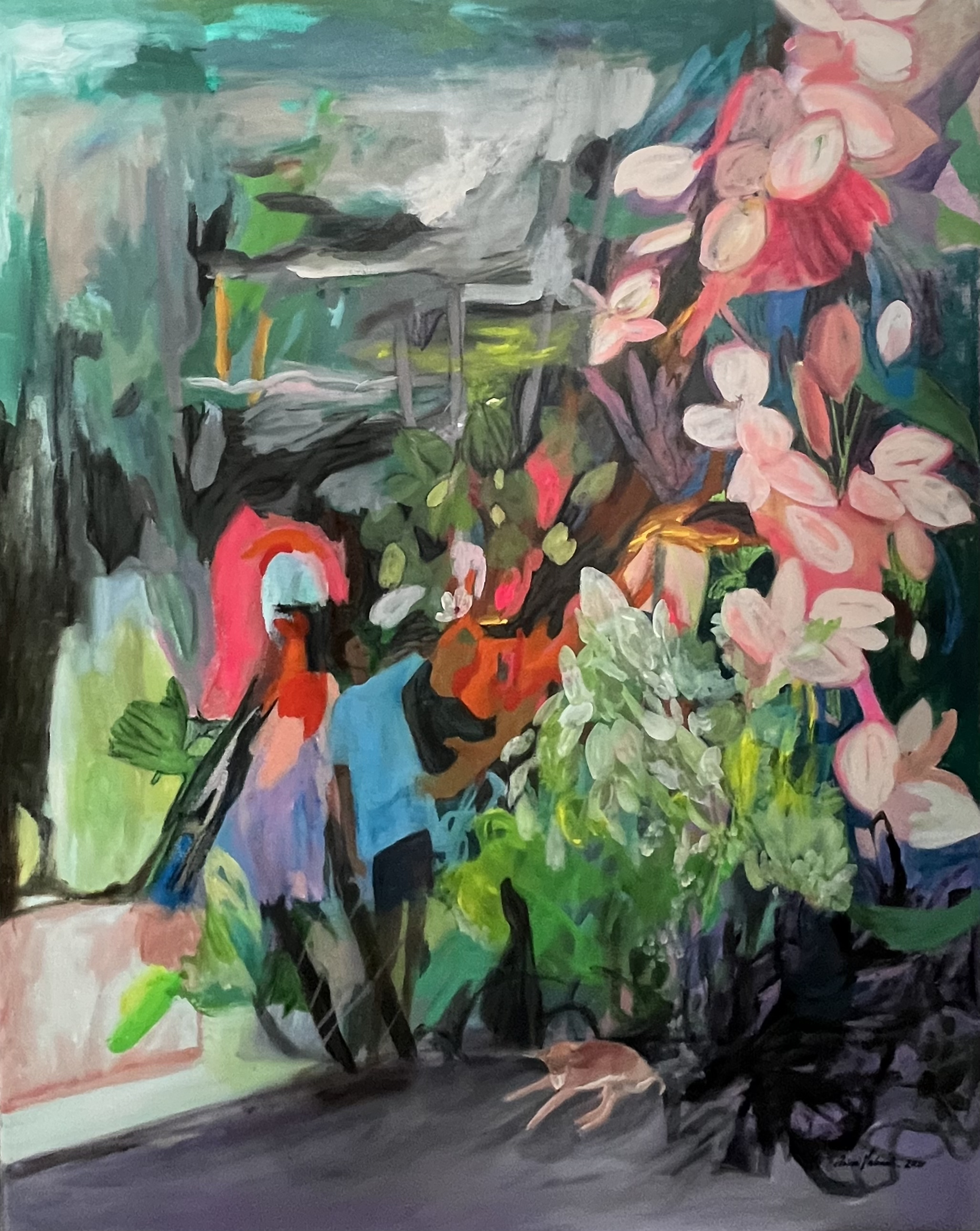
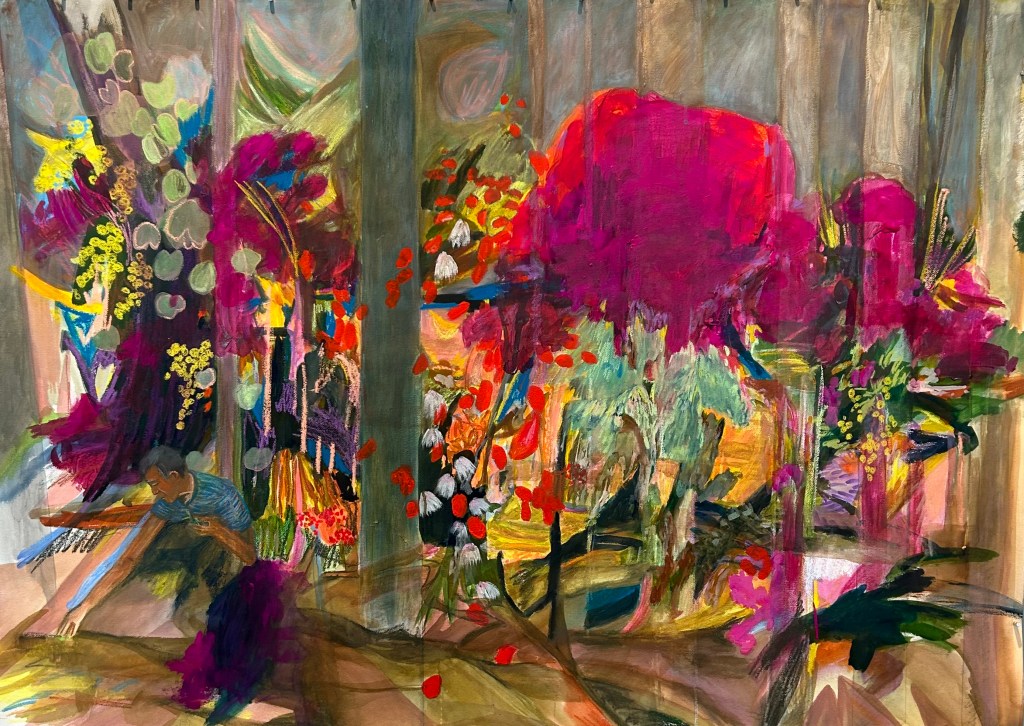
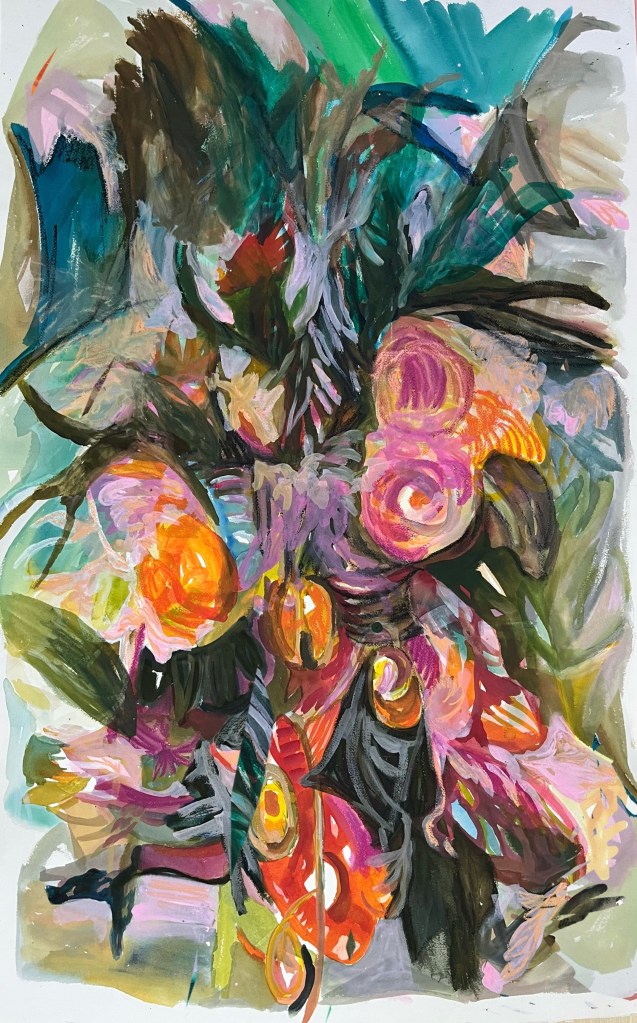
Everything in nature speaks of beauty. People have an innate sensitivity to the beauty in natural surroundings where we are most in touch with our inner selves, where we feel refreshed, alive and at peace. The violence to all the senses of the urban concrete experience is something most people in the cities have grown to tolerate. Being human, and living in tree-less places is not optimal living, I would argue that it is an assault to the soul. During the pandemic, most Metro Manila citizens had nowhere to go – there are dwindling trees, a lack of parks and few green open spaces in the city that afford a place of respite and refuge to the public.
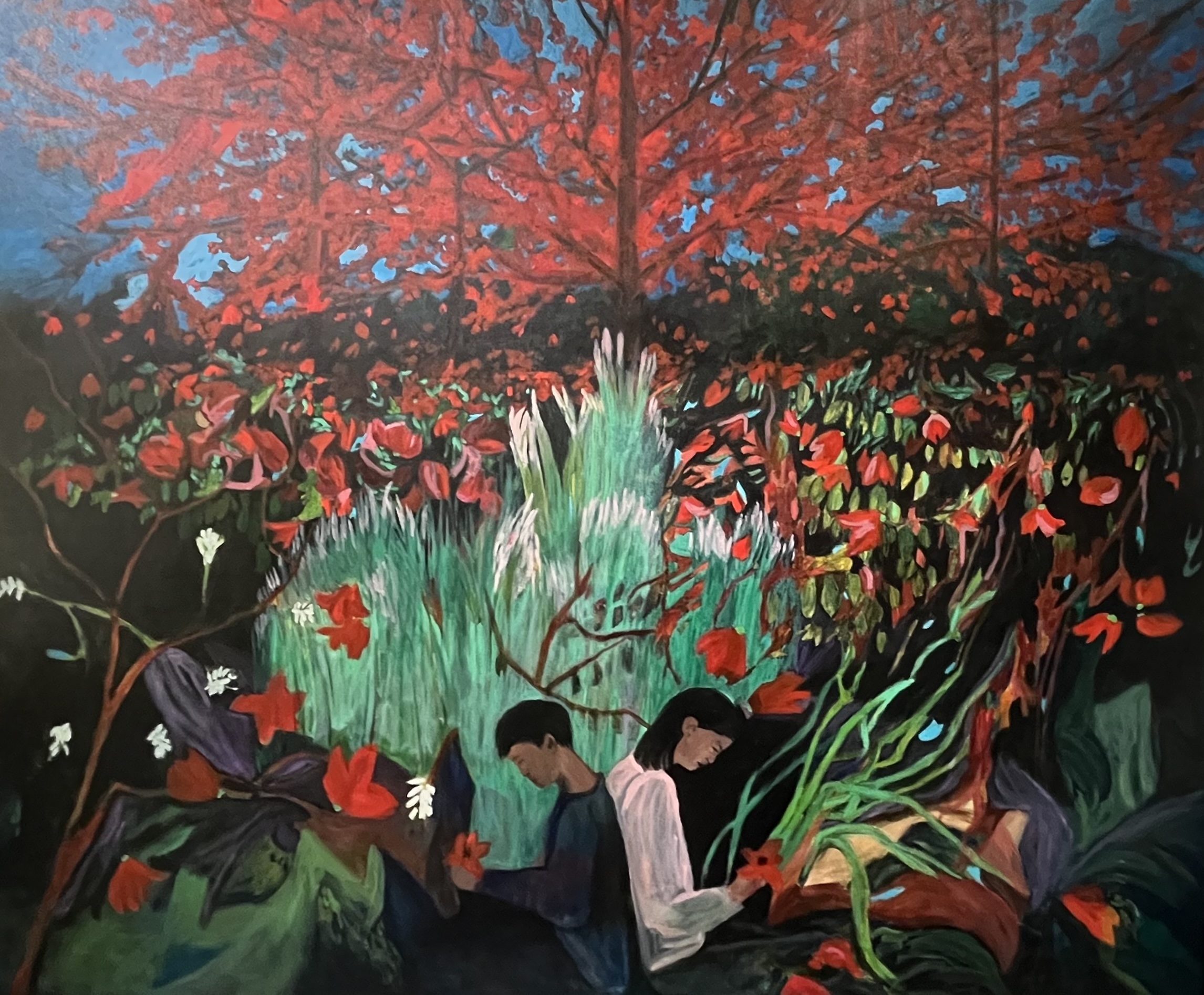
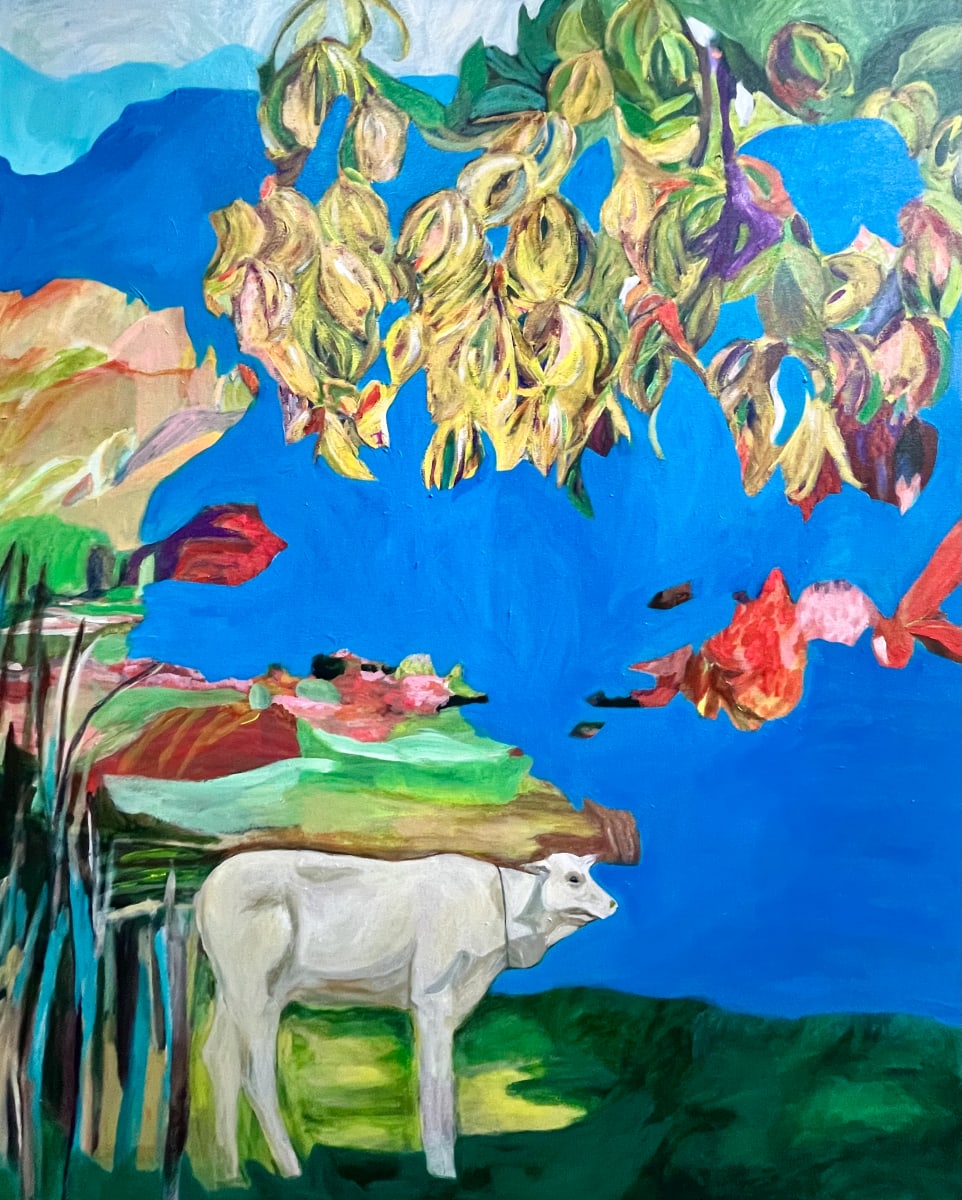
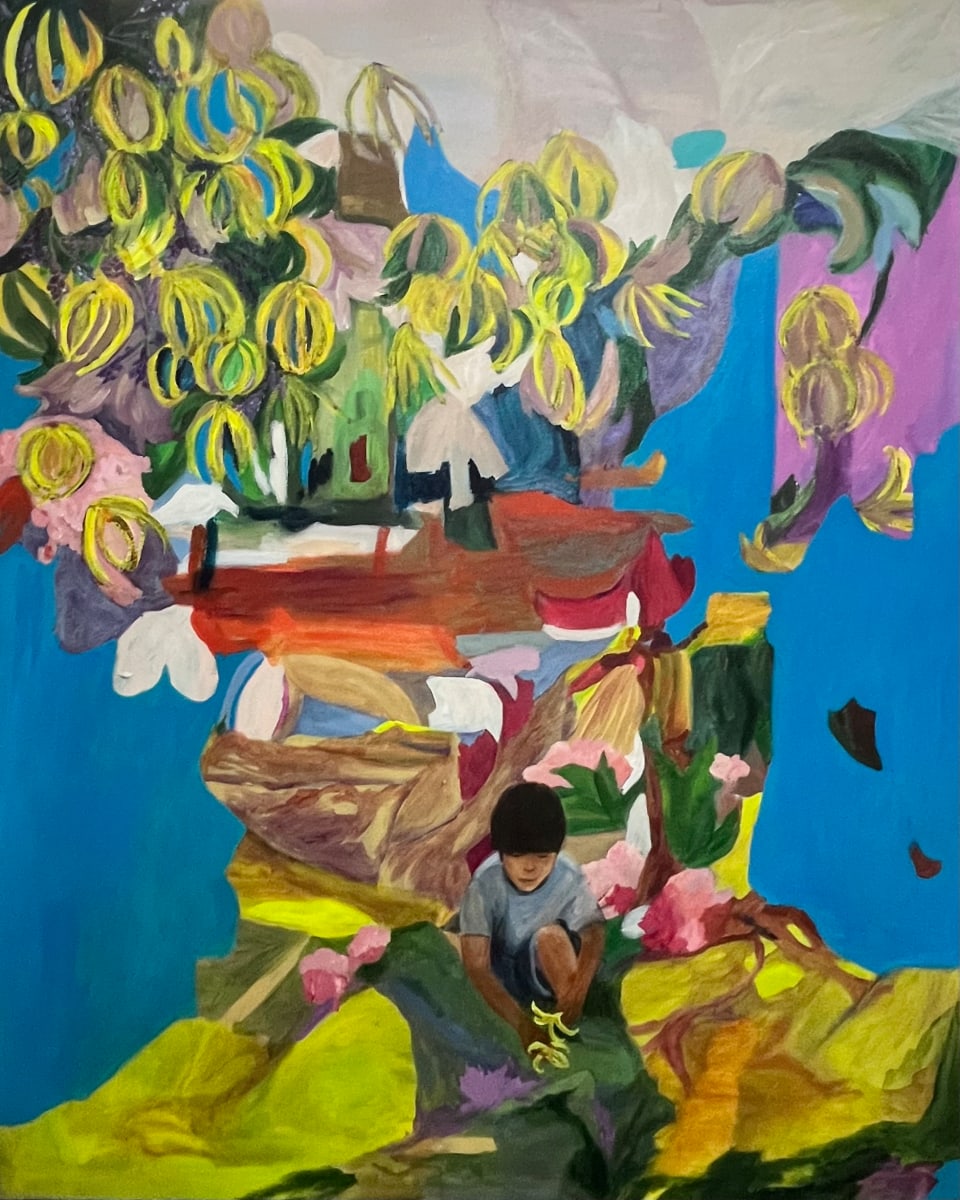
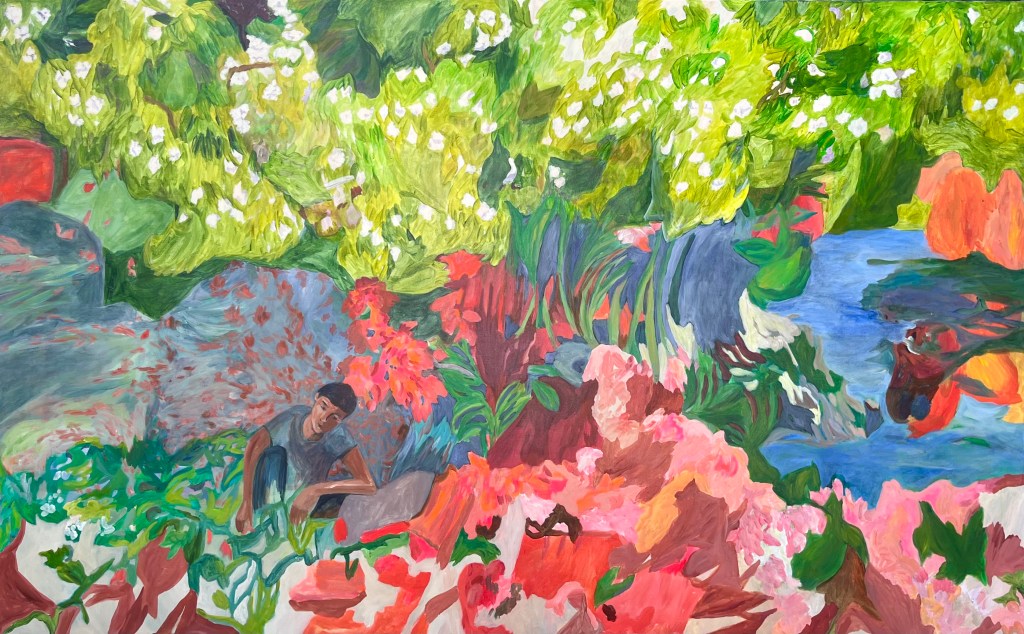
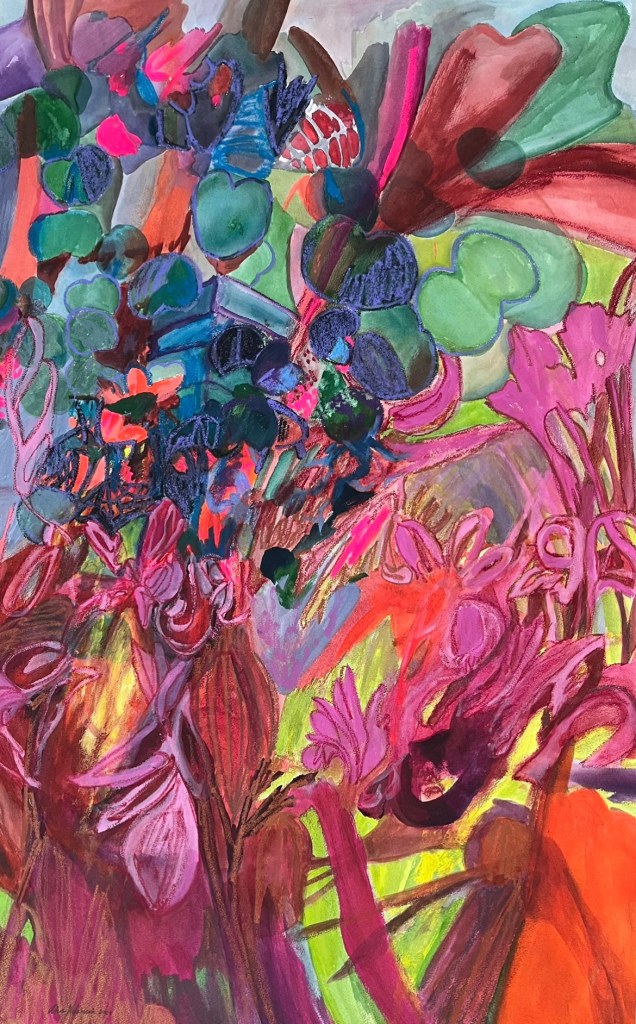
The series of paintings in Manifest Gardens are a reimagining of our cities abloom with Philippine flora and native trees. A bold and bright palette was lifted from the rare beauty of our Philippine native trees, most of which remain obscured from general public knowledge and awareness. During the past years when I began this series of paintings, I joined the Philippine Native Plants Conservation Society Inc., a band of very committed academics, botanists, biologists and garden enthusiasts, and consider this time a re-education for me of our own national ecological heritage- our beautiful, medicinal, resilient and majestic Philippine trees, many now in critical numbers. The bright yellow flowers of the Ilang-Ilang tree, the purple violet blooms of the Banaba, the white and yellow flowers of the Mapilig and the yellow peach flowers of the Balai Lamok lent their colors for the paintings’ dense compositions.
At first these were purely landscapes and then slowly I began to add the human figures. Nature in the wild, if left unperturbed is forever regenerating. But in a man-made environment, the care of the human hand is needed. To cultivate gardens, pocket gardens, or even to care for a single plant is a humanitarian act for our own personal and communal well-being as well as a concrete move to recognize our inter-beingness with other life forms. The solitary men and women amidst the largeness of nature signal a peaceful co-existence with our co-creatures. In painting these, I pose the question- Is it time to reconsider the position of man as having dominion over all living things? To dominate is to control, consume, extract and siphon our natural resources with abandon. How has this stance affected human engagements to the earth thus far? Perhaps it is time to give the notion of dominion a rest, and to allow a more equal, equitable and respectful relationship to nature to take its place.
It has been said that we are now moving from the era of the Anthropocene, a time characterized by this oppressive abuse of nature without fear or care of consequence of the earth’s limited and precious resources, to a new era of the Symbiocene. Coined by Australian philosopher Glen Albrecht, the Symbiocene emphasizes the human imperative to engage all living things in a way that respects and recognizes each one as vital for survival. A symbiotic way of life therefore begins with the realization that we must live in harmony, in cooperation and in mutuality with plants, trees, our seas and mountains, the birds and butterflies and all living things. The natural world has its secret workings and intelligences developed through millennia that we can learn from and emulate. Nature, given the chance, can save us all.
According to the Public Parks and Open Spaces, A Planning and Development Guide published by ASSURE, PIEP and PALA: “ The World Health Organization (WHO) recommends a minimum of 9 square meter of green open space per person. According to the Green City Index, Metro Manila currently has 5 square meters per person. To reach the WHO standard, Metro Manila will need to add 52 square kilometers of green open space, roughly the size of Manila and Makati combined.” In making these paintings, I mean to reflect on what we are losing from one day to the next, as well as create a hopeful gesture of what is still is possible given the ecological state we are in. Growing pockets of green together as a citizenry can build living green corridors, to support a symbiotic way of life for ourselves and the creatures who co-inhabit our city.
From the Painting Studio to the Garden
Painting gardens led me to begin building a real garden. The idea of artists in civic practice who enter the public realm appealed to me and after almost two years, a garden for children was born. The Children’s Play Garden in Rizal Park, Luneta is a playground and mini arboretum of some thirty newly planted Philippine native trees that opened last November 17, 2023. This was completed as part of my thesis for an MFA at Lesley University, Cambridge USA. This work is an artistic gesture, a living art form made in collaboration with many groups and individuals that serves a need for children to play freely amidst nature while learning about our Philippine native trees and the care and protection of our rich ecological heritage.
The exhibition is a culmination of a three year process of fusing art and service to the community that began in 2021 with my MFA, the opening of the Children’s Play Garden and ending with the paintings at the Drawing Room.
This undertaking deepened my belief that art is expansive, transformative and viable in both the gallery and museum spaces and outside, in the public realm serving the community and bringing focus on the most pressing problems in our highly urbanized world today.
Aina Zulueta-Valencia
March 5, 2024

Click on the link for the video that accompanied the show:
https://drive.google.com/file/d/1tvP1hYbc45P2co8JMdeiSHss9PKN1Cun/view
 Aina Zulueta-Valencia